AI
OpenAI fires back at Google with GPT-5.2
The message behind GPT-5.2 is clear: OpenAI wants its crown back.

Just a heads up, if you buy something through our links, we may get a small share of the sale. It’s one of the ways we keep the lights on here. Click here for more.
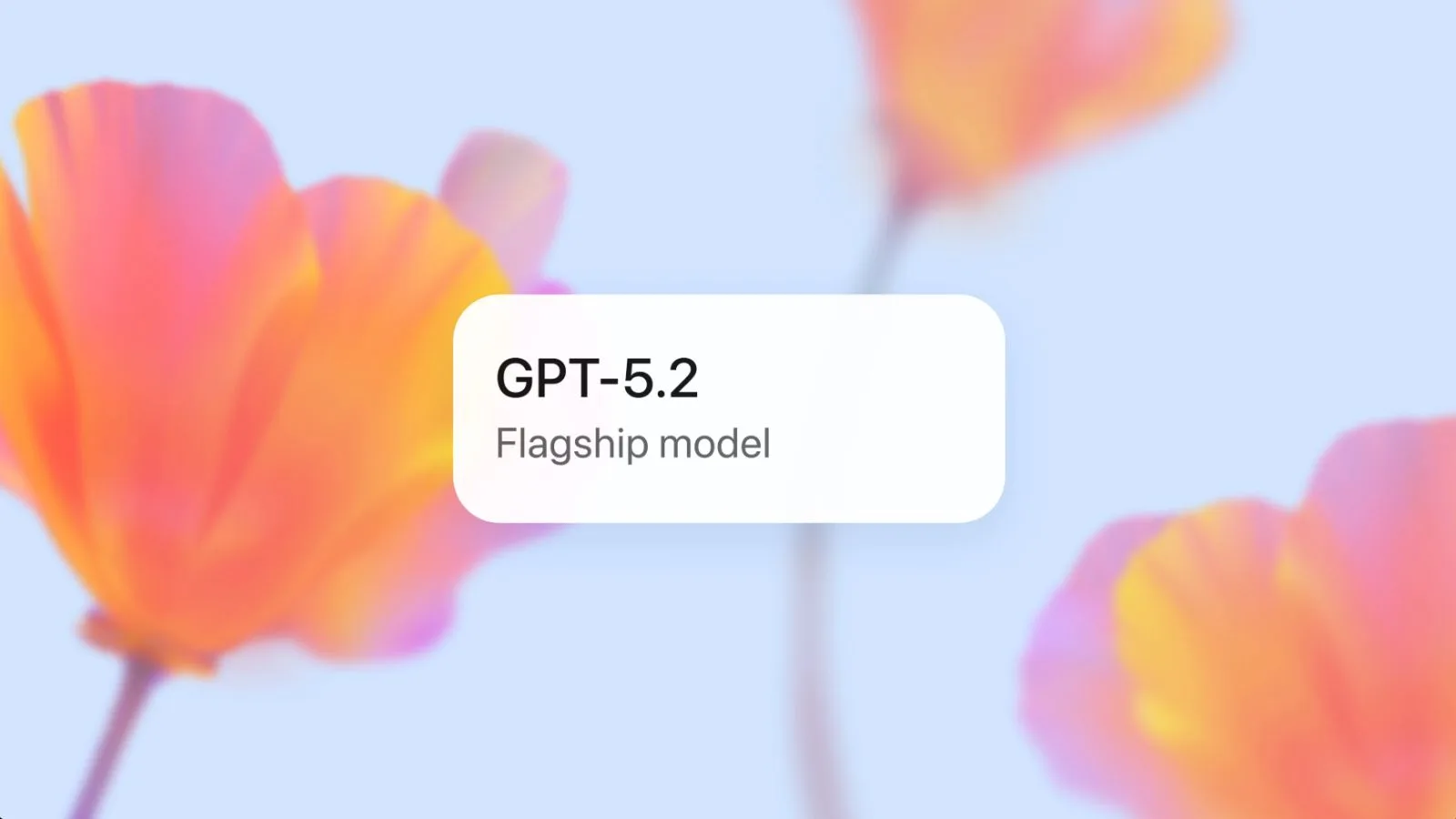
OpenAI kicked down the saloon doors of the AI frontier on Thursday with the launch of GPT-5.2, its latest “frontier model,” engineered for everyone from coders to spreadsheet warriors to people who just want ChatGPT to stop hallucinating their tax forms.
The announcement arrives as competition with Google heats up, setting the stage for yet another installment of Silicon Valley’s favorite genre: the high-budget model showdown.
GPT-5.2 comes in three neatly packaged personalities. Instant is the speedy one—good for answering questions, writing emails, and pretending you read that report.
Thinking is the deep, introspective type built for coding marathons, doctoral-level reasoning, and wrestling with 300-page PDFs.
And Pro is the heavyweight champ, optimized for the most demanding, accuracy-hungry tasks where mistakes could cost someone money, or worse, embarrassment.
OpenAI’s leadership pitched the model as a major upgrade. Chief product officer Fidji Simo said GPT-5.2 is better at everything from building presentations to linking together multi-step projects.
Basically, it wants to be your overachieving coworker.
And the timing? Convenient. Earlier this month, CEO Sam Altman reportedly issued a “code red” memo after noticing slumping ChatGPT traffic and Google’s Gemini 3 eating into mindshare like Pac-Man.
The message behind GPT-5.2 is clear: OpenAI wants its crown back. Benchmarks show the new Thinking mode edging out Google’s Gemini 3 and Anthropic’s Claude Opus in math, logic, and software engineering tasks.
Researchers say this isn’t just about who can solve the hardest equation, it’s about who can think straight over long, complex reasoning paths, the kind that power financial modeling or advanced debugging.
But here’s the catch: thinking is expensive. These reasoning-heavy modes devour compute, and OpenAI is already spending more cash on inference than many expected.
With the company committing a jaw-dropping $1.4 trillion to infrastructure over the next few years, GPT-5.2 is both a flex and a gamble.
Notably missing from the launch? A new image generator, awkward, considering Google’s “Nano Banana” models have been going viral for weeks.
Rumor has it that OpenAI has another model coming in January to fill that gap.
For now, GPT-5.2 marks OpenAI’s attempt to steady the ship, sharpen its tech, and reclaim the narrative, one benchmark at a time.
Follow us on Flipboard, Google News, or Apple News




Review Roundups
Review roundup: Samsung Galaxy Z TriFold