Microsoft
Windows 11 leads, yet a billion PCs continue with Windows 10
Windows 11 is taking the lead in the OS race, but strict hardware demands and user habits mean nearly a billion PCs are still happily running Windows 10.


Just a heads up, if you buy something through our links, we may get a small share of the sale. It’s one of the ways we keep the lights on here. Click here for more.
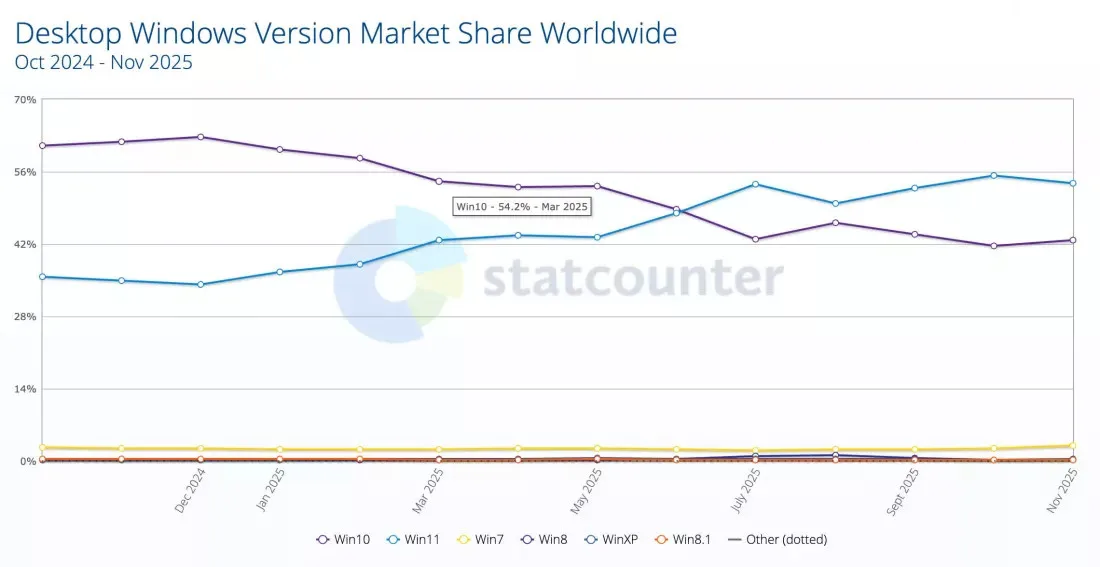
Windows 11 is officially ahead in the Windows popularity race, with just under 54% of desktop users running the new kid—at least by the numbers.
Yet, scratch beneath that surface and the “victory” looks a lot more like a default win than a true triumph. According to StatCounter, Windows 10 still runs on about 43% of desktops—showing just how sticky old habits (and hardware) can be.
The real headline? Nearly one billion PCs are still running Windows 10, even after Microsoft officially ended mainstream support back in October. And half of those machines wouldn’t qualify for Windows 11 even if their owners suddenly got upgrade-happy.
Why Half Can’t Upgrade
As first revealed by TechSpot, Dell’s chief operating officer dropped the bombshell: roughly 500 million Windows machines currently in use are too ancient to meet the new OS’s strict hardware requirements.
That leaves the other half—a cool 500 million PCs—fully capable of running Windows 11, yet resolutely un-upgraded. A mix of user stubbornness and plenty of supported apps has kept Windows 10 humming along for almost half the planet’s desktops.
PCMag reports that many users either don’t feel the pressure to upgrade or don’t realize just how unsupported they are.
It’s not just user inertia at play. As The Register notes, Microsoft is still providing Extended Security Updates (ESUs) to keep Windows 10 patched for at least another year—free for anyone with OneDrive, or for a one-time $30 fee or a pile of Microsoft Rewards points.
That safety net is making the upgrade cliff look more like a gentle slope.
The elephant-sized bouncer guarding the Windows 11 club: hardware requirements.
The updated OS, launched in late 2021, came with strict minimum system requirements—leaving millions of perfectly functional PCs unable to install it.
If your computer doesn’t tick enough boxes, your only upgrade path is buying a new machine. As TechSpot points out, this abrupt cutoff (alongside a less-than-smooth upgrade experience) is a major reason so many people are sticking with Windows 10.
In the corporate world, everything is slower, more expensive, and more complicated. The Register reports that IT leaders are employing the ESU grace period as a deliberate buffer, letting them hold out on older hardware and avoid mass disruption across their organizations.
Rolling out Windows 11 often means buying new computers and retraining staff, which is an easy “no thanks” for most businesses—especially when things are already working fine.
So, sure, Windows 11 is finally in the lead. But “winning” in this case is a little like inheriting a crown from a tired monarch who refuses to leave the palace.
For now, a billion Windows 10 users seem happy to ignore the fanfare—and Microsoft’s best laid upgrade plans—at least until the security lights start flickering out for good.
Follow us on Flipboard, Google News, or Apple News